Air pollution may be linked to increased risk of motor neurone disease, our new study indicates
January 27, 2026 – 12:45 PM
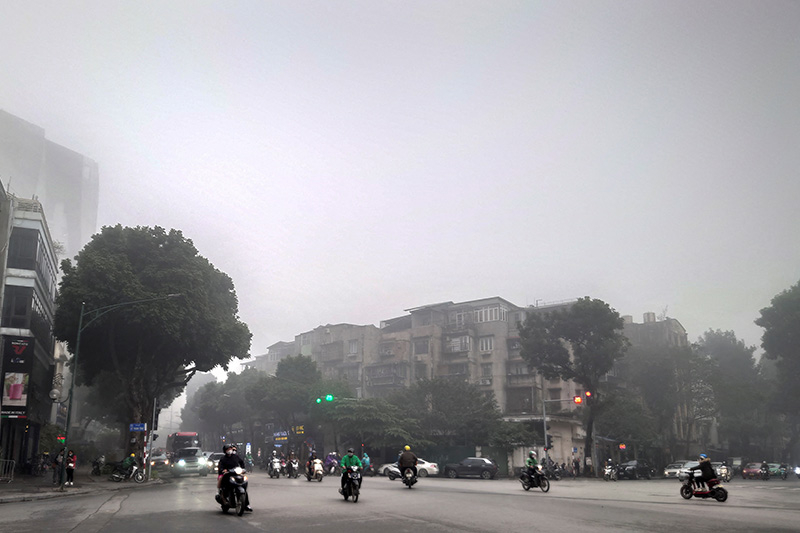
A view of traffic amid air pollution in Hanoi, Vietnam, February 2, 2024. (Reuters/Khanh Vu)
How logistics industry experts plan to ‘move forward’ after COVID-19
Reasons why Filipinos love Korean culture and products
Why Batangas is the destination for budget-friendly family holidays
The scientist Stephen Hawking lived with amyotrophic lateral sclerosis (ALS), the most common type of motor neurone disease, for 55 years. He was one of the longest-surviving people with the condition.
However, most people with
motor neurone disease
are not as lucky. It often progresses quickly, and many pass away within
two to five years
of diagnosis. There is still no cure. Genetics account for only about
10% of cases
, and the rest of the causes are still largely a mystery.
new study
in the journal Jama Neurology showed one possible contributor: air pollution, both for the risk of developing motor neurone disease and for how it progresses.
Particulate matter is made up of tiny airborne particles (far thinner than a human hair). It is usually grouped by size: PM2.5 (less than or equal to 2.5 micrometres), PM10 (less than or equal to 10 micrometres), and the in-between fraction PM2.5-10 (between 2.5 and 10 micrometres).
We also observed that people with motor neurone disease who had been exposed for years to higher levels of PM10 and nitrogen dioxide faced a greater risk of death or of needing a machine to help them breathe.
Doctors regularly keep tabs on how well patients are managing everyday functions across a few key areas. These include bulbar function (speech, saliva control and swallowing), fine motor function (handwriting, cutting food, dressing and personal hygiene), gross motor function (turning in bed and adjusting bedding, walking and climbing stairs) and breathing (shortness of breath, difficulty breathing when lying flat, and signs of respiratory failure).
The participants in our study were assessed about every six months after diagnosis. We then looked at how quickly the disease was getting worse overall and within each of these domains. Patients whose decline was faster than that of 75% of other patients were labelled as having faster progression.
We found that long-term exposure to air pollution was associated with higher odds of having faster progression overall, particularly affecting motor and respiratory function, but not bulbar function.
Broader implications
The reasons for these differences are not yet clear. One possibility is that different parts of the nervous system vary in their vulnerability to pollution-related injury. It could also be because air pollution has consistently been linked to chronic lung diseases, reduced lung function and infections, all of which have been associated with poorer outcomes in ALS.
We accounted for many factors that could influence both air pollution exposure and motor neurone disease risk, including personal and neighborhood income, education, occupation and whether participants lived in urban or rural areas. Our study did not have data on smoking habits or indoor air pollution exposure. However, there is no evidence suggesting that people with and without motor neurone disease differ significantly in these factors in ways that would explain our findings.
These results bring us closer to understanding motor neurone disease and may eventually help with earlier diagnosis and better treatment. But there’s a wider message here. We’re all exposed to air pollution, and the evidence keeps mounting that it harms our health in serious ways. Cleaning up our air could do far more good than we realise.
Jing Wu
, Postdoctoral Researcher, Integrative Epidemiology,
Karolinska Institutet.
The Conversation
under a Creative Commons license. Read the
original article
TAGS
air pollution
motor neurone
motor neurone disease
Stephen Hawking