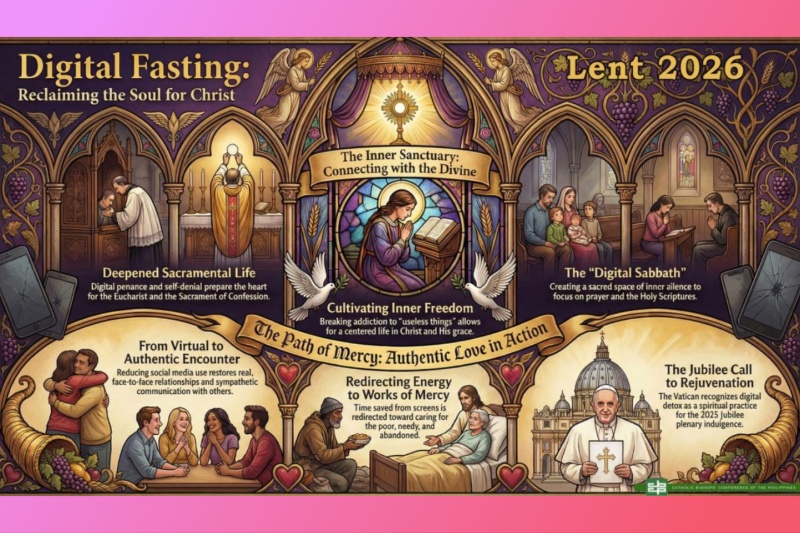
‘Fasting beyond food: Inviting Christ into digital media use’
February 17, 2026 – 7:00 AM
How logistics industry experts plan to ‘move forward’ after COVID-19
Reasons why Filipinos love Korean culture and products
Why Batangas is the destination for budget-friendly family holidays
Dear Brothers and Sisters in Christ,
Grace and peace be with you in our Lord Jesus Christ.
As we approach the holy season of Lent 2026, the Catholic Bishops’ Conference of the Philippines (CBCP) invites all the faithful to renew their hearts through prayer, fasting, and works of mercy. In the Gospel, Jesus reminds us that fasting is not for show but an intimate offering to God, who sees what is done in secret and rewards sincerity of heart.
In our present time, fasting must also address the new realities shaping human life. One of the greatest influences today is digital media. Thus, we invite the faithful to undertake a Digital Media Fasting as a contemporary expression of conversion and renewal.
Fasting Beyond Food
True fasting, as Jesus teaches, is not an external performance but an interior conversion. Digital media fasting, therefore, invites a rediscovery of silence, prayer, contemplation, and authentic relationships. It is not meant to punish the body but to free the heart.
Why Digital Media Fasting Is Necessary Today
Technology is a blessing when used responsibly, yet excessive media use often leads to distraction, fatigue, loss of focus, weakened relationships, and diminished spiritual awareness. Constant connectivity leaves little room for silence and reflection. Many struggle to be present to God and others because screens constantly demand attention. Digital media fasting helps restore balance and reminds us that technology must serve human life—not dominate it.
The Spiritual Purpose
Digital media fasting is not simply about giving something up. It is about making room for something better. By limiting digital consumption, we create time for prayer, reading Scriptures, Eucharistic devotion, works of mercy, and meaningful encounters with others. Fasting redirects attention from self-centered habits to the loving service of others. It is not deprivation but transformation.
Practical Ways to Practice Digital Media Fasting
• Avoid phone use before sleep and upon waking.
• Limit social media and streaming time.
• Observe device-free meals and gatherings.
• Practice occasional 24-hour or weekend digital fasts.
• Remove distracting apps.
• Replace screen time with prayer, service, reading, or conversation.
Inviting Christ into Media Use
Digital media fasting is not anti-technology. Rather, it asks: How can Christ guide our use of media? The virtuous use of technology becomes a tool for good rather than a source of distraction. Each person’s practice may differ, but all are called to freedom in Christ.
Fruits of Digital Media Fasting
• A deeper relationship with God through renewed prayer.
• Greater mental clarity and focus.
• Emotional peace through freedom from constant stimulation.
• Improved rest and renewed physical energy.
• Stronger family and community relationships.
• Renewed appreciation of creation and real-life encounters.
Final Exhortation
The Lord calls us to fast not with gloomy faces but with joyful hearts seeking renewal. In stepping back from digital excess, we reclaim interior silence, deepen relationships, and rediscover God’s presence in daily life.
Entrusting this pastoral invitation to the intercession of Mary, Mother of the Church, we encourage all dioceses, parishes, families, and communities to promote media fasting during Lent and beyond.
May Christ renew us in faith, hope, and love.
For the Catholic Bishops’ Conference of the Philippines,
+ GILBERT A. GARCERA, D.D.
Archbishop of Lipa
President, Catholic Bishops’ Conference of the Philippines
Lent, 13 February 2026
TAGS
Catholic Bishops Conference of the Philippines
cbcp
digital fasting
Lent
Lent 2026