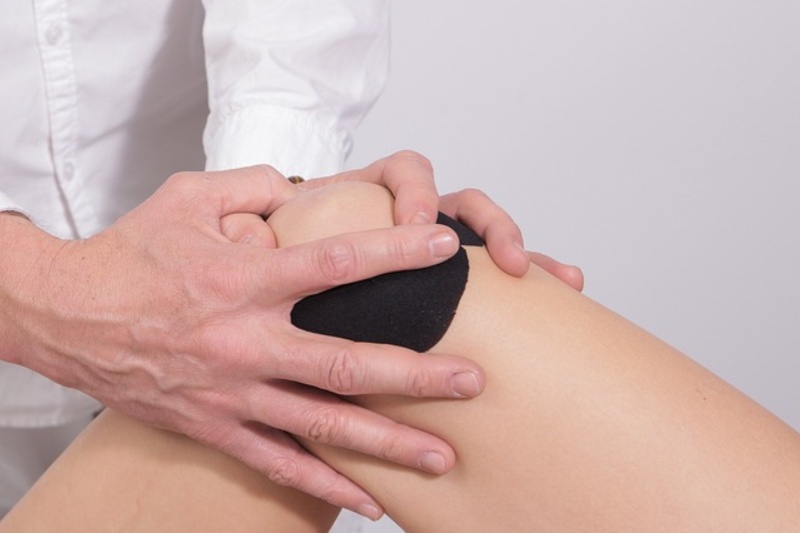
Knee problems tend to flare up as you age – an orthopedic specialist explains available treatment options
December 4, 2025 – 4:31 PM
Image by whitesession via Pixabay
How logistics industry experts plan to ‘move forward’ after COVID-19
Reasons why Filipinos love Korean culture and products
Why Batangas is the destination for budget-friendly family holidays
Knee injuries are common in athletes, accounting for
41% of all athletic injuries
experiences knee pain each year
As a
physical therapist and board-certified orthopedic specialist
, I help patients of all ages with knee injuries and degenerative conditions.
Your knees have a huge impact on your mobility and overall quality of life, so it’s important to prevent knee problems whenever possible and address pain in these joints with appropriate treatments.
Healthy knees
knee joint
bones consist of the femur, tibia and patella. As in all healthy joints, smooth cartilage covers the surfaces of the bones, forming the joints and allowing for controlled movement.
Muscles, ligaments and tendons further support the knee joint. The
anterior cruciate ligament
, commonly known as the ACL, and
posterior cruciate ligament
, or PCL, provide internal stability to the knee. In addition, two tough pieces of
fibrocartilage
, called menisci, lie inside the joint, providing further stability and shock absorption.
All these structures work together to enable the knee to move smoothly and painlessly throughout everyday movement, whether bending to pick up the family cat or going for a run.
Causes of knee pain
Two major causes of knee pain are acute injury and osteoarthritis.
Ligaments such as the ACL and PCL can be stressed and torn when a shear force occurs between the femur and tibia. ACL injuries often occur when athletes land awkwardly on the knee or quickly pivot on a planted foot. Depending on the severity of the injury, these patients may undergo physical therapy, or they may require surgery for repair or replacement.
PCL injuries are less common. They occur when the tibia experiences a posterior or backward force. This type of injury is common in car accidents when the knee hits the dashboard, or when patients fall forward when walking up stairs.
The menisci can also experience degeneration and tearing from shear and rotary forces, especially during weight-bearing activities. These types of injuries often require rehabilitation
through physical therapy or surgery
Knee pain
can also result from injury or overuse of the muscles and tendons surrounding the knee, including the quadriceps, hamstrings and patella tendon.
Both injuries to and overuse of the knee can lead to degenerative changes in the joint surfaces, known as osteoarthritis.
Osteoarthritis is a progressive disease
that can lead to pain, swelling and stiffness. This disease
affects the knees of over 300 million people
developing osteoarthritis
that affects their daily lives, with the knee being the most commonly affected joint.
Age is also a factor in knee pain. The
structure and function of your joints
change as you age. Cartilage starts to
break down
, your body produces less
synovial fluid
to lubricate your joints, and muscle strength and flexibility decrease. This can lead to painful, restricted movement in the joint.
Risk factors for knee problems
There are some
risk factors for knee osteoarthritis
that you cannot control,
such as genetics, age, sex
and your history of prior injuries.
Fortunately, there are several risk factors you can control that can predispose you to knee pain and osteoarthritis specifically. The first is excessive weight. Based on studies between 2017 and 2020, nearly
42% of all adult Americans are obese
. This obesity is a significant risk factor for diabetes and osteoarthritis and can also play a role in other knee injuries.
A lack of physical activity is another risk, with
1 in 5 U.S. adults
reporting that they’re inactive outside of work duties. This can result in
less muscular support
for the knee and more pressure on the joint itself.
An inflammatory diet also adds to the risk of knee pain from osteoarthritis. Research shows that the
average American diet
, often high in sugar and fat and low in fiber, can lead to changes to the
gut microbiome
that
contribute to osteoarthritis pain and inflammation
Preventing knee pain
Increasing physical activity is one of the
key elements to preventing
knee pain. Often physical therapy intervention for patients with knee osteoarthritis focuses on strengthening the knee to decrease pain and support the joint during movement.
The U.S. Department of Health and Human Services recommends that adults spend at least 150 to 300 minutes per week on moderate-intensity, or 75 to 150 minutes per week on vigorous-intensity
aerobic physical activity
. These guidelines do not change for adults who already have osteoarthritis, although their exercise may require less weight-bearing activities, such as swimming, biking or walking.
The agency also recommends that all adults do some form of resistance training at least two or more days a week.
Adults with knee osteoarthritis
particularly benefit from quadriceps-strengthening exercises, such as straight leg raises.
Treatments for knee pain
Conservative
treatment of knee pain
includes anti-inflammatory and pain medications and physical therapy.
Medical treatment for knee osteoarthritis
by one to three years on average
, depending on the number of injections.
Physical therapy is generally a longer-lasting treatment option for knee pain. Physical therapy treatment leads to more sustained pain reduction and functional improvements when compared with
cortisone injections treatment
some meniscal repairs
Patients with osteoarthritis often benefit from total knee replacement, a surgery with a high success rate and lasting results.
Surgical interventions for knee pain include the repair, replacement or removal of the ACL, PCL, menisci or cartilage. When more conservative approaches fail, patients with osteoarthritis may benefit from a partial or total
knee replacement
to allow more pain-free movement. In these procedures, one or both sides of the knee joint are replaced by either plastic or metal components. Afterward, patients attend physical therapy to aid in the return of range of motion.
Although there are risks with any surgery, most patients who undergo knee replacement benefit from decreased pain and increased function, with
90% of all replacements
lasting more than 15 years. But not all patients are
candidates for such surgeries
, as a successful outcome depends on the patient’s overall health and well-being.
New treatments on the horizon
New developments for knee osteoarthritis are focused on less invasive therapies. Recently, the U.S. Food and Drug Administration approved a new implant that acts as a
shock absorber
. This requires a much simpler procedure than a total knee replacement.
Other promising interventions include
knee embolization
, a procedure in which tiny particles are injected into the arteries near the knee to decrease blood flow to the area and reduce inflammation near the joint. Researchers are also looking into injectable solutions derived from human bodies, such as
plasma-rich protein and fat cells
, to decrease inflammation and pain from osteoarthritis. Human stem cells and their growth factors also show potential in treating knee osteoarthritis by
potentially improving muscle atrophy
repairing cartilage
Further research is needed on these novel interventions. However, any intervention that holds promise to stop or delay osteoarthritis is certainly encouraging for the millions of people afflicted with this disease.
Angie Brown
, Clinical Associate Professor of Physical Therapy,
Quinnipiac University.
The Conversation
under a Creative Commons license. Read the
original article
TAGS
knee
knee injuries
orthopedic