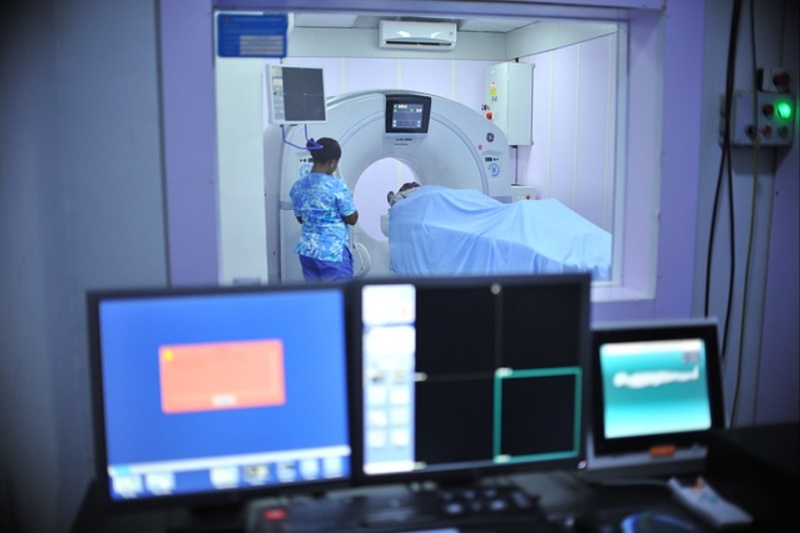
Health Rounds: MRI detects heart-related pain missed by standard testing
December 5, 2025 – 8:00 AM
(Image by dmchannelsng via Pixabay)
How logistics industry experts plan to ‘move forward’ after COVID-19
Reasons why Filipinos love Korean culture and products
Why Batangas is the destination for budget-friendly family holidays
A new testing protocol identifies patients whose chest pain is heart-related even though their main heart arteries look normal during typical exams, according to results of a new study.
During the usual coronary angiography testing procedure, patients lie on a table while doctors inject dye into the arteries that carry blood to the heart, looking for places in the larger vessels where flow of the dye is impaired or blocked.
“People may have real angina even when the main arteries appear wide open,” study leader Dr. Colin Berry of the University of Glasgow said in a statement.
“By measuring blood flow with a stress cardiac MRI test, we found that small vessel problems were common,” he added.
In the study, 250 adults with chest pain but no blocked coronary arteries based on angiography all underwent stress cardiac MRI tests, his team reported at the just-concluded
American Heart Association scientific meeting
in New Orleans.
When doctors reviewed the stress cardiac MRI images, about half of participants were diagnosed with microvascular angina, compared with fewer than 1 in 100 when doctors relied only on angiogram tests.
More than half of those diagnosed with microvascular angina were women. The diagnosis was significantly linked with improved quality of life, the researchers also found.
“The results of our study open a new path for people with chest pain,” Berry said.
“Clinical practice should now change to include a stress cardiac MRI test for angina, especially for women with chest pain and no blockages in the main arteries.”
Newer test more accurately predicts kidney disease course
When there is a wide discrepancy between results of a newer blood test for evaluating kidney function and the results of an older test, the new diagnostic accurately identifies high-risk patients, researchers found.
The new test measures a protein called cystatin C. The older and still standard method for assessing the health of the kidney’s tiny blood filters, or glomeruli, involves blood tests for a waste product from muscle breakdown called creatinine.
However, creatinine levels depend in part on muscle mass, creating variability across age, sex, nutritional status, and medication use. Until recently, racially biased misconceptions about muscle mass led doctors to also consider skin color in interpreting kidney health based on creatinine levels.
In a new study of more than 800,000 patients in whom GFR was estimated using both cystatin C and creatinine, researchers saw wide discrepancies in some participants.
Overall, in 11% of outpatients, estimated GFR was significantly worse – at least 30% lower, indicating more advanced kidney disease – based on cystatin C measurement, researchers reported at the American Society of Nephrology
Kidney Week 2025
meeting in Houston and in
JAMA
Similar discrepancies were also seen in 35% of hospitalized patients, but the implications in this group were not as clear as in the outpatients and more research is needed, the authors said.
“Our findings highlight the importance of measuring both creatinine and cystatin C to gain a true understanding of how well the kidneys are working, particularly among older and sicker adults,” study leader Dr. Morgan Grams of NYU Langone Health said in a statement.
“Evaluating both biomarkers may identify far more people with poor kidney function, and earlier in the disease process, by covering the blind spots that go with either test,” Grams said.
Healthcare systems that have successfully implemented in-house cystatin C testing have seen improved clinical decision-making, experts not involved in the study wrote in a
JAMA editorial
“Given its higher cost, cystatin C cannot fully replace creatinine measurement,” the editorial noted.
—Reporting by Nancy Lapid; Editing by Bill Berkrot
TAGS
Colin Berry
coronary angiography testing