How the ‘slayer rule’ might play a role in determining who will inherit wealth from Rob Reiner and his wife
December 26, 2025 – 1:58 PM
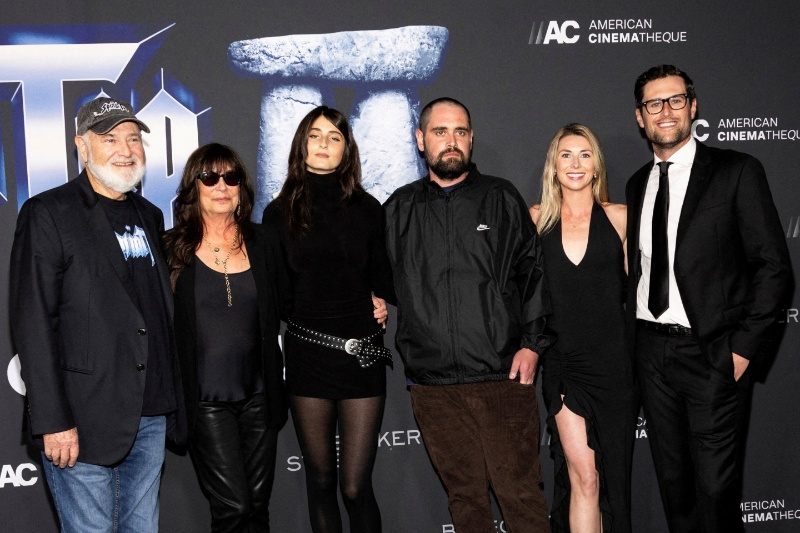
(Rob Reiner, Michele Singer, Romy Reiner, Nick Reiner, Maria Gilfillan and Jake Reiner attend the Los Angeles Premiere of ”Spinal Tap II: The End Continues” at The Egyptian Theatre in Los Angeles, California, U.S., September 9, 2025. Reuters/Aude Guerrucci)
How logistics industry experts plan to ‘move forward’ after COVID-19
Reasons why Filipinos love Korean culture and products
Why Batangas is the destination for budget-friendly family holidays
The fatal stabbings of
filmmaker and actor Rob Reiner and his wife
, the photographer and producer Michele Singer Reiner, have sparked widespread grieving. This tragedy, discovered on Dec. 14, 2025, is also increasing the public’s interest in what happens when killers could inherit wealth from their victims. That’s because Nick Reiner, their son, was
charged with two counts of first-degree murder
What’s the ‘slayer rule’?
All states
have some form of a slayer rule that prevents killers from inheriting from their victims. While the rules differ slightly from state to state, they always bar murderers from profiting from their own crimes.
Simply put, if you’re found guilty of killing someone or plead guilty to their murder, you can’t inherit anything from your victim’s estate.
In some states, this might go beyond inheritance and apply to jointly held property, insurance policies and
other kinds of accounts
Most of these slayer rules, including California’s, apply only to “
felonious and intentional
” killings, meaning that they don’t apply if you accidentally kill someone. Although there doesn’t have to be a guilty verdict by a judge or a jury, or a guilty plea from the accused, there must be some finding by a criminal or civil court of an intentional and felonious killing.
an 1889 murder case
in New York state, in which a 16-year-old boy poisoned his grandfather to get an inheritance that was written into his grandfather’s will.
How often are slayer rules invoked?
It’s hard to say for sure. As far as we know, nobody’s tried to keep track.
Slayer rules come into play whenever someone who would otherwise inherit assets from an estate is convicted of or found liable for murder, and the slayer is entitled to inherit from the victim.
These tragic cases almost always involve murders committed by relatives. Many of the high-profile ones have been tied to murders that occurred in California.
Famous disinherited murderers include Lyle and Erik Menendez, the Californians known as the
Menendez brothers
. In 1996, a jury found them guilty of the first-degree murder of their parents, José and Mary Louise “Kitty” Menendez. The Menendez brothers’ parents, who were killed in 1989, had a fortune that today
would be worth more than $35 million
The brothers, who became
eligible for parole
but were denied it in 2025, have been in prison ever since.
Once there has been a finding of an intentional and felonious killing, even if the slayer is later released on parole – or even if they serve no prison time at all – they would still not inherit anything.
In practical terms, that means if one or both of the Menendez brothers were to win parole in the future, they would still be ineligible to inherit any of their parents’ wealth upon their release from prison.
California’s slayer rule also meant that salesman
Scott Peterson
, who was convicted of
killing his pregnant wife, Laci Peterson
, in 2002, couldn’t collect the money he would otherwise have been due from
her life insurance policy
Peterson has been in prison since 2005.
What can block its application?
In the absence of a murder conviction, the slayer rule may not apply. For example, a conviction for a lesser criminal offense,
such as manslaughter
, might allow the accused – or their lawyers – to argue that the killing was unintentional.
This exception could be relevant to the prosecution of the Reiners’ murders if it were to turn out that Nick Reiner’s defense can show that
substance abuse
or schizophrenia
On the other hand, under California law,
even if there is no conviction
the probate court administering the murder victim’s estate could still separately find that the killing was intentional and felonious. That civil finding would bar the slayer from inheriting without a criminal conviction.
Does this only apply to families with big fortunes?
Slayer rules apply to anyone who kills one or more of their relatives, whether their victims were rich, poor or in between.
When large amounts of money are at stake, cases tend to garner more attention due to media coverage during the criminal trial and subsequent inheritance litigation.
Who will inherit Rob Reiner’s and Michele Singer Reiner’s wealth?
It’s too soon for both the public and the family to know who will inherit ultimately from the Reiners.
Wills are typically public documents, although the Reiners may have also engaged in other types of estate planning, such as trusts, that do not typically become public records. And celebrities with
valuable intellectual property rights
, such as copyrights from the Reiners’ many film and television properties, tend to establish trusts.
most of their fortune
– which reportedly was worth some US$200 million – to their children, including Nick, then California’s slayer statute may come into play. The
couple had two other children together
, Romy and Jake.
Rob Reiner also had another daughter, Tracy Reiner, whom he adopted after his marriage to his first wife, the actor and filmmaker Penny Marshall.
strong supporters of many causes
, including early childhood development.
Might the slayer rule apply to Nick Reiner?
It’s much too soon to know.
It is important to emphasize that the wills and other estate planning documents of Rob Reiner and Michele Singer Reiner have not yet been made public. That means what Nick Reiner might stand to inherit, if the slayer rule were to prove irrelevant in this case, is unknown.
Nor, with the investigation of the couple’s deaths still underway, can anyone make any assumptions about Nick’s innocence or guilt.
legal bills were being paid for
by the Reiner family.
Naomi Cahn
, Professor of Law,
University of Virginia
Reid Kress Weisbord
, Distinguished Professor of Law and Judge Norma Shapiro Scholar,
Rutgers University – Newark.
The Conversation
under a Creative Commons license. Read the
original article
TAGS
Michele Singer Reiner
Rob Reiner